

Can Scaffolding Go on My Neighbour’s Property? Boundary Access Rules in Victoria
In Victoria, scaffolding can only go on or over your neighbour’s property with their permission. Unlike New South Wales and several other states, Victoria has no general law giving owners a right to access neighbouring land for building work. That

Industrial Shutdown Scaffolding: Planning Access for Plant Maintenance
Industrial shutdown scaffolding should be scoped six to eight weeks before the plant goes offline, and pre-built wherever it can be done safely while the plant is still running. That lead time matters because scaffold access is the first job

Industrial Scaffold Access Solutions for Confined and High-Risk Sites
Learn how industrial scaffold access solutions are planned for confined and high-risk sites, including tanks, silos, shafts, rescue planning and inspection.

Scaffolding for Painters: Access Requirements for Exterior House Painting Jobs
Scaffolding for painters explained: access requirements for exterior house painting, two-storey homes, gutters and fascia, plus tower vs fixed scaffold options.

Scaffolding Around Skylights and Roof Penetrations: What Changes on Site
A skylight or roof penetration changes more than what’s visible from the ground. It changes how the entire scaffold is built around it. Standard wall-face scaffolding is designed for one purpose: giving workers safe, level access to a vertical surface.

Scaffolding for Rendering and Cladding Jobs: Access Requirements Compared to Bricklaying
Scaffolding isn’t one-size-fits-all across a renovation. A bricklayer, a renderer, and a cladding installer working on the same wall each need the platform set up differently. Bricklaying calls for a tight standoff so the tradesperson can work close to the

Scaffolding for Double-Storey Extensions: What to Expect on Site
Scaffolding on a double-storey extension does not go up once and stay the same until the job is done. It changes shape as the build rises, and knowing what to expect at each stage makes the difference between a smooth

The 5 Most Common Mobile Scaffold Tip-Over Incidents
A mobile scaffold can go from stable to sideways in seconds, and it usually happens without warning. Most tip-overs aren’t caused by faulty equipment. They’re caused by small, avoidable mistakes made under time pressure on-site. A wheel left unlocked. A

Permit Checklist for Residential Scaffolding in Melbourne
Residential scaffolding in Melbourne requires at least two separate permits before work can legally begin: a building or planning permit and a footpath occupation permit if the scaffold extends over public land. Most homeowners don’t know this until their contractor

The Role of Scaffolding in High-Rise Building Maintenance
High-rise buildings are engineered to last decades. But lasting that long takes more than strong materials: it takes consistent, planned maintenance. Facades crack. Cladding deteriorates. Sealants fail. Glass panels need inspection. HVAC systems mounted on upper floors require servicing. None
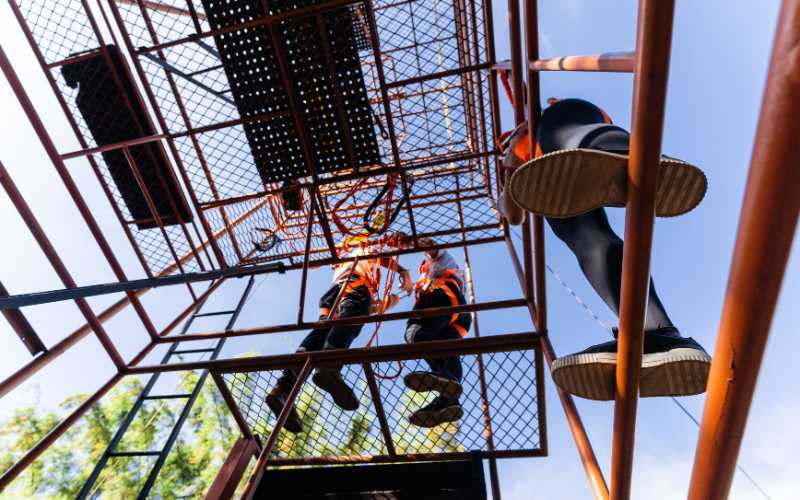
WorkSafe Victoria Scaffolding Requirements That Every Site Manager Should Know
Scaffolding failures don’t just cause delays in projects; they often terminate careers, close businesses, and claim lives. In Victoria, scaffolding is one of the most regulated activities on any construction site. WorkSafe Victoria enforces strict requirements covering who can erect