

Imagine a maintenance team preparing to inspect the inside of a large tank. The opening is narrow, the working area is awkward, and the team needs a stable platform once inside. A standard ladder or off-the-shelf access system may simply not be enough. Such situations call for industrial scaffold access solutions.
Purpose-designed temporary access systems can help workers reach difficult areas in a more controlled way, even if the job involves a confined vessel, elevated plant equipment or a complex industrial structure.
But the right solution depends on more than height alone. You must also consider entry points, working space, hazards, ventilation, load requirements and emergency access. Understanding these factors is the first step towards planning effective industrial access scaffolding.
What Is Industrial Scaffold Access?
Industrial scaffold access refers to temporary structures designed to give workers safe, practical access to areas that are difficult to reach during maintenance, inspection, installation or repair work. These systems include working platforms, walkways, stairways and access routes tailored to the site.

Unlike scaffolding used for straightforward construction work, industrial access scaffolding often has to work around existing equipment, restricted spaces and complex site conditions. It may be used in manufacturing facilities, refineries, power stations and infrastructure projects, as well as during shutdowns and turnarounds.
When conventional access methods are not practical, specialist scaffold access can provide a more suitable approach. The system can be planned around the task, the structure and the site’s specific access requirements.
What Type Of Scaffold Is Suitable For Confined Spaces?
There is no single “best” scaffold for every confined space. The right confined space scaffolding solution depends on what the workers need to do and the conditions they will encounter.
Before selecting a system, consider:
- Entry and exit dimensions
- Available working space
- Height or depth of the area
- Required working loads
- Ventilation
- Potential site hazards
- Emergency and rescue arrangements
For spaces with small entry points, modular or lightweight components may make installation more practical. You can also configure restricted access scaffolding to work within narrow or limited-entry environments where conventional systems may not fit.
The key is to design the scaffold around the work rather than trying to squeeze a standard configuration into an unsuitable space. A well-planned scaffold for narrow industrial spaces should provide the access and working area required without creating unnecessary obstructions or complicating movement through the site.
Can Scaffolding Be Used Inside Tanks And Silos?
Yes, scaffolding can provide temporary internal access for inspection, cleaning, maintenance, coating and repair work inside tanks, silos and similar industrial vessels when the system is properly designed and installed.
Scaffold access for silos, for example, may need to account for a narrow entry point, curved internal surfaces, existing obstructions and the loads that the working platform needs to support. Such scaffolding must also consider ventilation and emergency retrieval, particularly where the vessel presents confined-space hazards.
Choosing the best scaffold for tanks and silos starts with understanding the actual environment and the work involved. A solution that works well in one vessel may not suit another. Scaffold planning should therefore form part of the wider site-specific approach to safe access, work and emergency response.
Designing Scaffolding For A Restricted-Access Area
Restricted access can turn a straightforward scaffolding job into a highly challenging planning exercise. When the entry point is small or the working area is enclosed, you need to think about the entire job, not just where the platform will go.
A scaffold design team must resolve questions such as:
- How will materials enter space?
- How will workers safely enter and leave?
- Where can the scaffold stand or be supported?
- What loads will it need to carry?
- Could it affect ventilation or emergency egress?
- How will workers or equipment be retrieved if something goes wrong?
A scaffold design service that involves meticulous site assessment and planning can help address these constraints before installation begins. For unusual structures, a custom scaffold design may be required to develop engineered scaffolding for confined spaces with limited entry points. The design should account for the complete work process, including installation, use, inspection, rescue and dismantling.
What Safety Controls Are Needed Before Entering A Confined Space?
Scaffolding can provide a stable working area, but it does not remove the hazards associated with confined-space work. Before anyone enters, the site should have appropriate risk assessments and entry procedures based on the specific conditions.
Depending on the project, these controls may include:
- Identifying potential hazards
- Testing and monitoring the atmosphere
- Providing suitable ventilation
- Isolating energy sources or process hazards
- Establishing reliable communication
- Using appropriate PPE
- Preparing emergency arrangements
- Ensuring competent, appropriately trained personnel are involved
This is particularly important when planning scaffold access for areas with hazardous gases or poor ventilation. Most importantly, access arrangements should never obstruct ventilation, monitoring or emergency procedures.
How Should Scaffolding Support Confined-Space Rescue?
Rescue planning should begin before the scaffold goes into space. A carefully designed system can support the work without creating additional obstacles for rescuers or restricting emergency egress.
Consider the location of access points, working platforms and escape routes. There should also be enough room for appropriate retrieval equipment and clear communication between workers inside the space and those outside.
Safe scaffold access for confined spaces therefore needs to support two situations: normal work and emergency retrieval. The scaffold configuration may need to accommodate vertical retrieval equipment or provide suitable clearance for rescue operations, depending on the site and rescue method.
Coordinating the scaffold design with the site’s confined space scaffold rescue plan helps identify potential problems before installation. It also ensures that the access system forms part of the wider emergency strategy.
What Equipment Is Needed For Vertical Confined-Space Entry?
Vertical entry often requires more than a working platform. Depending on the depth, entry point and task, the access arrangement may include vertical ladders or access systems, working platforms, guardrails and suitable retrieval equipment.
Some projects may also require engineered support or anchorage points for specific access or rescue arrangements. Scaffold access for shafts and utility chambers, for example, can involve significant depth and restricted entry, making careful planning particularly important.
You should select equipment according to the site’s risk assessment, entry method and rescue requirements. Good scaffold design takes into consideration how workers will get in, perform the task, move around the space and leave safely when the job is complete.
How Can Industrial Scaffolding Reduce Fall Risk?
Working at height around machinery, vessels or industrial structures can make even a routine maintenance task more challenging. Properly designed scaffolding provides workers with a stable platform and a planned access route.
Features such as guardrails, properly formed platforms, safe access routes and suitable working levels can help provide more controlled movement around equipment. In high-risk maintenance areas where workers may need to operate around machinery or elevated structures, such structures can be invaluable.
A professional scaffold installation service, followed by appropriate inspection and maintenance, helps keep the system suitable for its intended use. Scaffolding does not eliminate every fall hazard, but it can form an important part of a wider site safety strategy.
Scaffold inspection and certification for confined-space projects
A scaffold should be inspected before it is put into use and at appropriate stages throughout the project. This becomes particularly important in confined spaces, where damage or changes may be harder to spot because visibility and access can be limited.
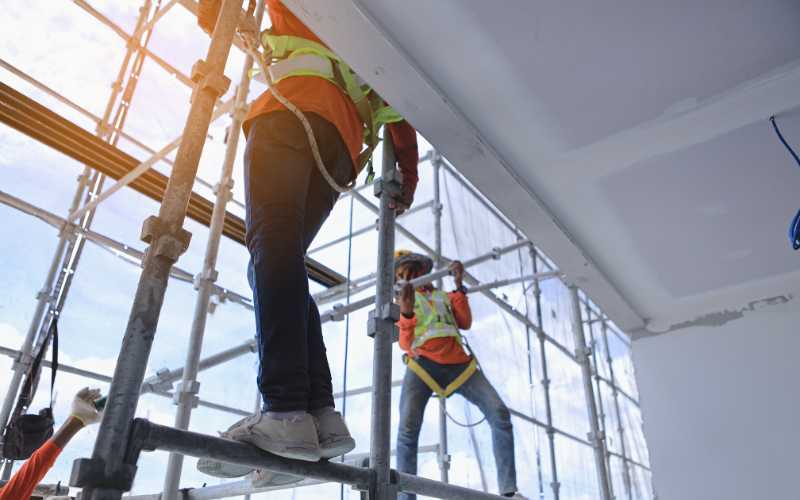
A professional scaffold inspection service can check the structure for issues such as damage, deterioration or unauthorised changes. They can also provide appropriate documentation for the completed system.
Inspections should account for changes in the working environment. Clear inspection records help site teams understand the scaffold’s condition and identify issues before they affect ongoing work.
Choosing An Industrial Scaffolding Contractor For High-Risk Sites
Not every scaffolding project presents the same challenges. A contractor working on a straightforward building project may not have the experience needed for confined spaces, restricted access or complex industrial maintenance.

When choosing an industrial scaffolding contractor, look for relevant experience with:
- Confined and restricted-access environments
- Industrial maintenance
- Shutdowns and turnarounds
- High-level or complex access requirements
It can also be useful to choose a contractor that can coordinate design and engineering, installation, inspection, certification, and dismantling. Effective scaffold project management can help keep these stages connected from initial planning through completion.
For particularly demanding projects, an experienced confined space scaffolding contractor can bring the expertise needed to plan around unusual site constraints.
Where Are Specialist Scaffold Access Solutions Used?
Specialist scaffolding can support maintenance, inspection and repair work across a wide range of challenging industrial environments, including:
- Tanks and silos, where internal platforms may be needed for inspection, cleaning or repairs
- Tunnels and culverts, where restricted dimensions can make conventional access difficult
- Shafts and utility chambers, particularly where workers need controlled vertical access
- Plant rooms, where scaffolding may need to work around existing equipment and services
- Refineries and power stations, where complex structures and high-level equipment require carefully planned access
- Manufacturing facilities, for maintenance around machinery, production equipment and elevated structures
- Infrastructure projects, where access requirements can vary significantly across the site
- Shutdowns and turnarounds, when multiple maintenance tasks need temporary access within a limited timeframe
Each environment presents different challenges. Entry points, available space, working height, loading requirements, ventilation and site hazards all influence the most suitable scaffolding solution, and on sites where heavy materials need to be raised between levels, it may also determine whether construction lifting equipment hire is needed alongside the scaffold.
How To Plan Scaffolding Inside Tanks, Silos, And Industrial Vessels?
Good planning can prevent access problems once the maintenance team arrives on site. A practical process might look like this:
- Assess the space, structure and entry point.
- Identify hazards and define the work requirements.
- Determine the access routes and working levels needed.
- Develop and review the scaffold design.
- Plan installation, inspection, certification and rescue arrangements.
- Install, inspect and certify the scaffold before use.
Starting early gives the team time to address restricted access or unusual site conditions. An early start is particularly valuable for scaffold access for industrial maintenance and shutdown projects, where efficient access can help maintenance teams keep work moving safely and according to schedule.
The Right Scaffold Starts With The Site
There is no universal scaffold solution for confined and high-risk industrial environments. The right system needs to reflect the actual site, including access points, working height, available space, loads, ventilation, hazards, emergency retrieval and the work being carried out.
That is why specialist input can be valuable from the early planning stage. When you need access inside a vessel, around an elevated plant or through a restricted industrial area, discussing the requirements with an experienced scaffold team can help identify a practical approach.
Need help planning access for a challenging industrial site? ABS Enterprize can do a site assessment or scaffold access consultation can be a useful starting point for discussing your access requirements, design, engineering and installation needs.
Planning access for a confined or high-risk site?
Talk to ABS Enterprize about industrial scaffold design, installation and inspection. Call (03) 9305 2493 or request a quote.


