
Scaffolding failures don’t just cause delays in projects; they often terminate careers, close businesses, and claim lives.
In Victoria, scaffolding is one of the most regulated activities on any construction site. WorkSafe Victoria enforces strict requirements covering who can erect scaffolding, how it must be inspected, and who is legally responsible when things go wrong. Understanding these rules is not optional for Melbourne site managers; it is an essential component of their job.
The benchmark document currently in force is the Scaffolding Industry Standard, last updated in December 2024. It sets out the minimum compliance requirements every duty holder must meet. Whether you’re managing a high-rise in the CBD or a residential renovation in the suburbs, these standards apply to your site.
At ABS Enterprize, we work alongside Melbourne builders, developers, and site managers every day. We’ve seen personally how compliance gaps, which are often caused by simple misconceptions of the requirements, result in costly interventions, stop-work orders, and serious occurrences. This guide breaks down what the WorkSafe Victoria scaffolding requirements actually mean in practice, so your site stays safe, compliant, and productive.
Why Scaffolding Compliance Is Non-Negotiable in Victoria
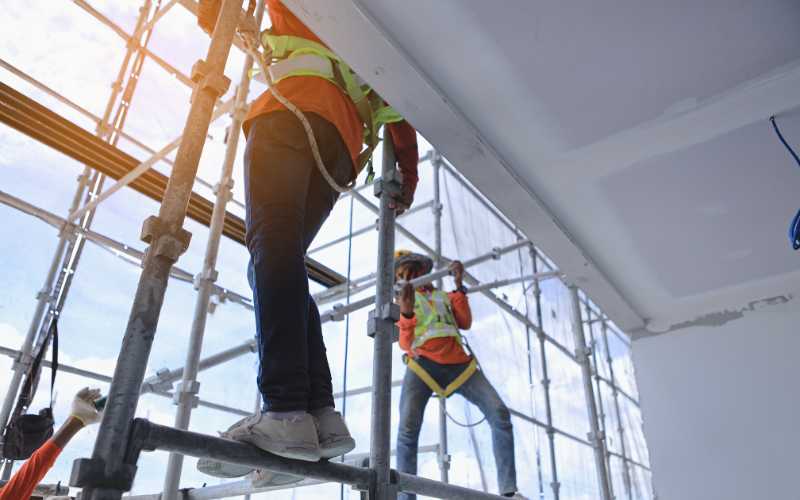
Falls from height remain one of the leading causes of serious workplace injuries and fatalities in the Victorian construction industry. Scaffolding, when incorrectly erected, poorly maintained, or used outside its design limits, is a direct contributor to those incidents.
WorkSafe Victoria has the authority to issue improvement notices, prohibition notices, and stop-work orders on any site where scaffolding is found to be non-compliant. Beyond the immediate safety risk, non-compliance exposes principal contractors, site managers, and employers to significant legal and financial penalties under the Occupational Health and Safety Act 2004 (Vic).
Compliance is not a box-ticking exercise. It is your legal obligation and your duty of care to every worker on site.
Understanding the WorkSafe Victoria Scaffolding Industry Standard (December 2024)
The Scaffolding Industry Standard is the primary guidance document that WorkSafe Victoria uses to assess compliance across Victorian construction sites. It is not a suggestion, it reflects the minimum acceptable standard for scaffolding work in this state.
The standard covers three categories of scaffolding:
- Basic scaffolding – includes prefabricated steel scaffolding, trestle scaffolding, and suspended scaffolding up to specific height and complexity thresholds
- Intermediate scaffolding – includes cantilevered, spur, and hung scaffolding, and any work requiring more complex configuration
- Advanced scaffolding – includes bridge scaffolding, mast climbers, and scaffolding on complex engineered structures
Each category carries different licensing, design, and inspection requirements. Understanding which category applies to your site is the first step toward compliance.
What the 2024 Update Reinforced
The December 2024 standard strengthened expectations around documentation, competency verification, and inspection frequency. It emphasised the duties of individuals who utilise scaffolding, as well as those who install it. For site managers, this is particularly important. You are a duty holder whether or not you personally touched the scaffold.
Who Is Responsible? Duty Holders Explained
One of the most misunderstood aspects of Victorian scaffolding law is that responsibility is shared. WorkSafe Victoria identifies multiple duty holders across the scaffolding supply chain, and each carries distinct obligations.
Designers and Suppliers
Anyone who designs a scaffolding system must ensure it is fit for purpose, structurally sound, and accompanied by adequate documentation. Suppliers and hirers of scaffolding equipment are required to provide plant that meets Australian Standards and is in safe working condition. If you are sourcing scaffold hire in Melbourne Victoria, you should be confirming that your supplier meets these obligations before a single tube goes up.
Erectors and Users – Site Managers, That’s You
The erector, or licensed scaffolder, is responsible for building the scaffold to the design specifications and industry standards. But your obligations as the site manager don’t begin after erection is complete. You are responsible for:
- Ensuring only licensed and competent workers erect, alter, or dismantle scaffolding on your site
- Confirming that the appropriate scaffold category has been identified and the correct licence class is held
- Ensuring the scaffold is not altered without authorisation
- Making sure workers do not use a scaffold that has not been formally handed over and inspected
Responsibility doesn’t transfer. If a non-compliant scaffold is found on your property, you share responsibility, regardless of who placed it there.
Licensing Requirements for Scaffolding in Victoria
Victoria requires a High Risk Work (HRW) licence for scaffolding work. The licence class must match the category of scaffolding being erected.
- SB licence — basic scaffolding
- SI licence — intermediate scaffolding
- SA licence — advanced scaffolding
A scaffolder holding an SB licence cannot legally erect intermediate or advanced scaffolding. As a site manager, it is your responsibility to verify that the licence class held by every scaffolding worker on your site is appropriate for the work being performed.
When a High Risk Work Licence Is Required
An HRW licence is required any time scaffolding is erected, altered, or dismantled, regardless of height. There is a common misconception that low-level scaffolding falls outside licensing requirements. It does not. If it qualifies as scaffolding under the standard, a licence is required.
Supervisory Arrangements
A licensed scaffolder must be present and directly supervising any scaffolding work on your site. Remote or passive supervision is not sufficient. The supervisor must hold the appropriate licence class for the work being performed and must be physically present during erection, alteration, and dismantling.
Scaffold Inspections: Who, When, and How Often
Inspections are one of the most critical and most frequently overlooked, compliance requirements for Melbourne site managers.
Under the current standard, scaffolding must be inspected:
- Before it is first used (handover inspection)
- After any alteration or modification
- After any occurrence that may have compromised its integrity – such as poor weather, impact, or close excavation
- Scaffolding remaining in place At least every 30 days, at frequent intervals during its use
The inspection must be performed by a qualified person, who has the knowledge, abilities, and experience to discover flaws and compare the scaffold to the design and standard. The result of every inspection must be documented and records kept on site.
A scaffold that has not been formally inspected and handed over must not be used. This applies even if it looks complete.
Documentation Your Site Must Have
WorkSafe Victoria inspectors can and do request documentation during site visits. Being unable to produce it is itself a compliance failure. At a minimum, your site records should include:
- Proof of HRW licence for all scaffolding workers
- The scaffold design documentation (for intermediate and advanced scaffolding)
- Handover certificates signed by the erecting scaffolder
- Inspection records with dates, findings, and the name of the inspecting person
- Records of any modifications made to the scaffold after initial erection
Good documentation is more than simply a compliance requirement; it is your first line of defence in the case of an incident or a WorkSafe enquiry.
Choosing the Right Scaffolding Partner in Melbourne
Compliance starts with who you choose to work with. Not all scaffolding companies in Melbourne operate to the same standard, and the consequences of choosing the wrong partner fall heavily on the site manager when something goes wrong.
When evaluating Melbourne scaffold solutions for your next project, ask the right questions upfront:
- Can you provide current HRW licence certificates for all scaffolding workers?
- Will you supply design documentation for intermediate or advanced scaffolding?
- What does your inspection and handover process look like?
- Do you carry current public liability and workers compensation insurance?
- Are you familiar with the December 2024 Scaffolding Industry Standard?
A reputable scaffolding partner will respond to these enquiries confidently and comprehensively. If they can’t or won’t, you’ve learned everything you need to know.
Compliance Starts With the Right Scaffolding Partner
WorkSafe Victoria’s scaffolding requirements exist for one reason: to prevent serious injury and death on construction sites. The December 2024 Scaffolding Industry Standard is the current benchmark, and as a site manager in Melbourne, it defines your legal obligations from the moment scaffolding is planned to the moment it comes down.
Licensing, inspections, documentation, and duty holder accountability are not bureaucratic burdens. They are the framework that keeps your workers safe and your project moving.
At ABS Enterprize, we take that framework seriously and we build it into every job we do. Our scaffolding is safe and regulation-compliant, meeting WorkSafe Victoria’s current standards so your site is never exposed. We install efficiently, minimising disruption to your programme and keeping your project on schedule. Every solution is designed to suit your project, whether you’re working on a high-rise in Melbourne’s CBD or a mid-size commercial build in the suburbs. And throughout the entire process, you’re backed by expert guidance from a team that knows Victorian scaffolding compliance inside out.
ABS Enterprize is one of the trusted scaffolding companies in Melbourne that builders rely on. We bring licensed professionals, rigorous inspection processes, and full documentation to every engagement. That means you can focus on delivering the project, not managing compliance risk.
Planning a project that requires scaffold hire in Melbourne Victoria? Contact the ABS Enterprize team today and find out how our melbourne scaffold solutions keep your site safe, compliant, and moving from day one.